
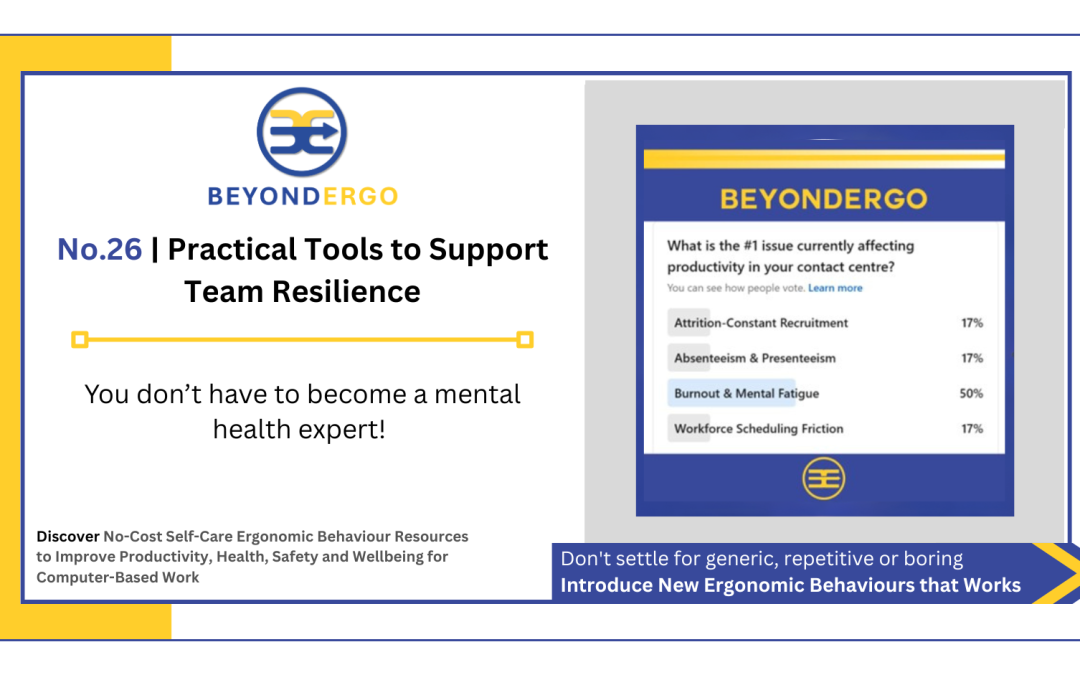
The trigger for writing this newsletter was the many conversations and the results from my March LinkedIn Poll, revealing leaders’ ongoing concern and desire to support team resilience.
In Short
- Recognition of high levels of mental and physical stress faced by CX agents.
- A little theory about the complex nature of that stress.
- Practical ways leaders can help
- Your next step – Take Action
In Detail
In the world of high-pressure customer service, the “frontline” isn’t just a metaphor. Computer-intensive and customer-facing roles have changed dramatically over the last 20 years, evolving into what are truly “tough gigs” characterised by information overload, emotional dissonance, and constant technological shifts.
As a contact centre leader, you likely see the impact of these pressures every day. But here is the good news: talking to staff about managing stress and anxiety can significantly impact team performance when matched with practical demonstrations and management support. Supporting your team doesn’t mean becoming a mental health professional; it means providing a “toolbox” of simple, no-cost actions that help build everyday resilience.
Understanding the Contact Centre Stress Profile
Research shows that contact centre agents face unique stress triggers that go beyond the typical office environment. These include quantitative demands like work pace and time pressure, cognitive demands regarding memory and decision-making, and significant emotional demands.
One of the most taxing aspects is emotional dissonance: the requirement to maintain a “bubbly” personality and express positive emotions regardless of true feelings. This dissonance is not just mentally draining; it is a recognised risk factor for developing upper-body muscle soreness and emotional distress.
The Link Between Mental and Physical Health
We often treat mental and physical health as separate buckets, but they are strongly linked. The physical affects the mental—just as the mental affects the physical. For example, a slouched “turtle posture” caused by long hours on a laptop can actually increase negative moods and feelings of helplessness.
Conversely, physical actions can shift mental states. “Power posing”—standing in a posture of confidence—can boost feelings of self-assurance even when someone feels anxious.
Practical Tools for Your Resilience Toolbox
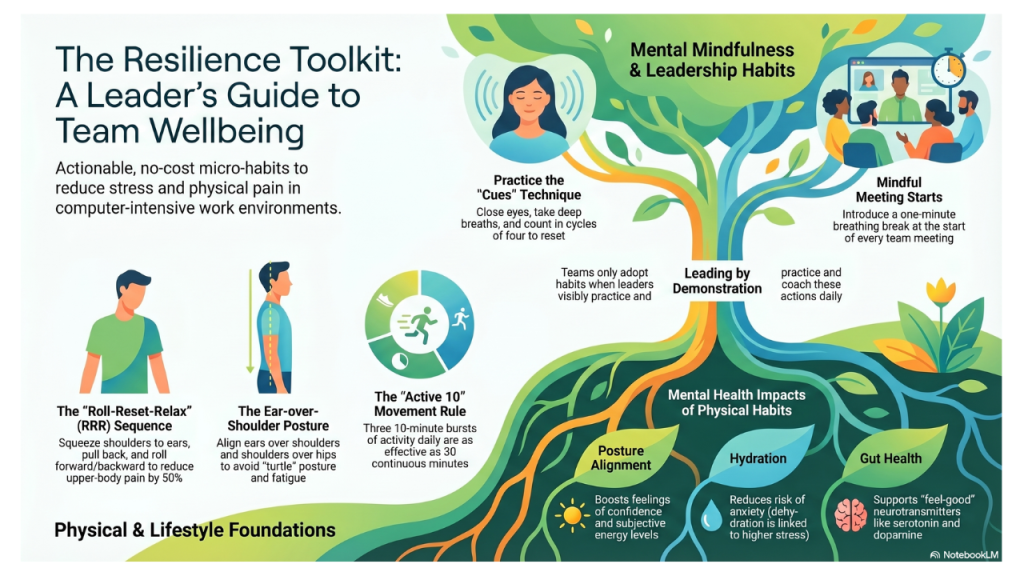
To support your team, focus on action. Here are three practical strategies you can introduce immediately:
- The “Roll-Reset-Relax” (RRR) Habit. Computer work builds immense tension in the neck and shoulders. Helping your team make the RRR sequence an automatic work habit can reduce upper-body aches and pain by up to 50%.
- How to do it: Squeeze shoulders to ears, squeeze blades together, push shoulders down, pull them forward, and then roll them forward and back three times. Finish with a deep breath to consciously relax the arms.
- Mindful “Cues” to Reset Headspace: The goal of mindfulness in a contact centre isn’t long meditation; it’s about becoming aware of how you feel so you can release stress before it escalates. Introduce a “Mindful Moment” at the start of every team meeting to make it a normal part of the culture.
- The “Cues” Exercise: Ask the team to settle back, close their eyes, and check in with their feelings. Have them take deep breaths, release jaw tension, and count in cycles of four to block negative thoughts. End by asking them to decide on just one thing they need to do next.
- The “Active 10” Approach: You don’t need a gym at the office to see the benefits of exercise. Being active for just 10 minutes, three times a day, is as effective as 30 minutes of continuous exercise. Encourage your team to take a 10-minute walk before work, during lunch, and after work to clear “brain trash” before they head home to their families.
Your Role as a Leader: Share and Show
Your team needs your guidance to establish these as habits. Information is power, but knowledge is only the first step; the real work is putting these things into practice.
- Look for the signs: Watch for physical indicators (headaches, fatigue) or behavioural changes (withdrawal, increased absenteeism) that might suggest a team member is slipping into distress.
- Demonstrate the behaviours: When your team sees you include these actions in your natural work routine, they will slowly become part of the everyday culture.
- Keep it simple: Pick one activity, introduce it at a meeting, ask for feedback, and revisit it over time.
By fostering these self-care techniques, you aren’t just improving retention and reducing absenteeism; you are helping your team prevent stress from taking control of their lives. Start the conversation at your next team meeting—your team’s resilience depends on it.
If you’re exploring ways to embed these skills into your team’s daily routines or are having challenges building engagement, I’d love to hear from you. I am always happy to share information and ideas. Let me know how I can help.
Click Here to Subscribe to the Beyond Ergo Newsletter
Why not connect with me personally here on LinkedIn
#ContactCentreLeadership, #EmployeeWellbeing, #WorkplaceHealthAndSafety, #CustomerExperience, #WorkforcePerformance, #EmployeeExperience